
The Fruit Doesn't Lie. Your Supply Chain Shouldn't Either.
You can't taste where fruit came from. But your customers want to know anyway.
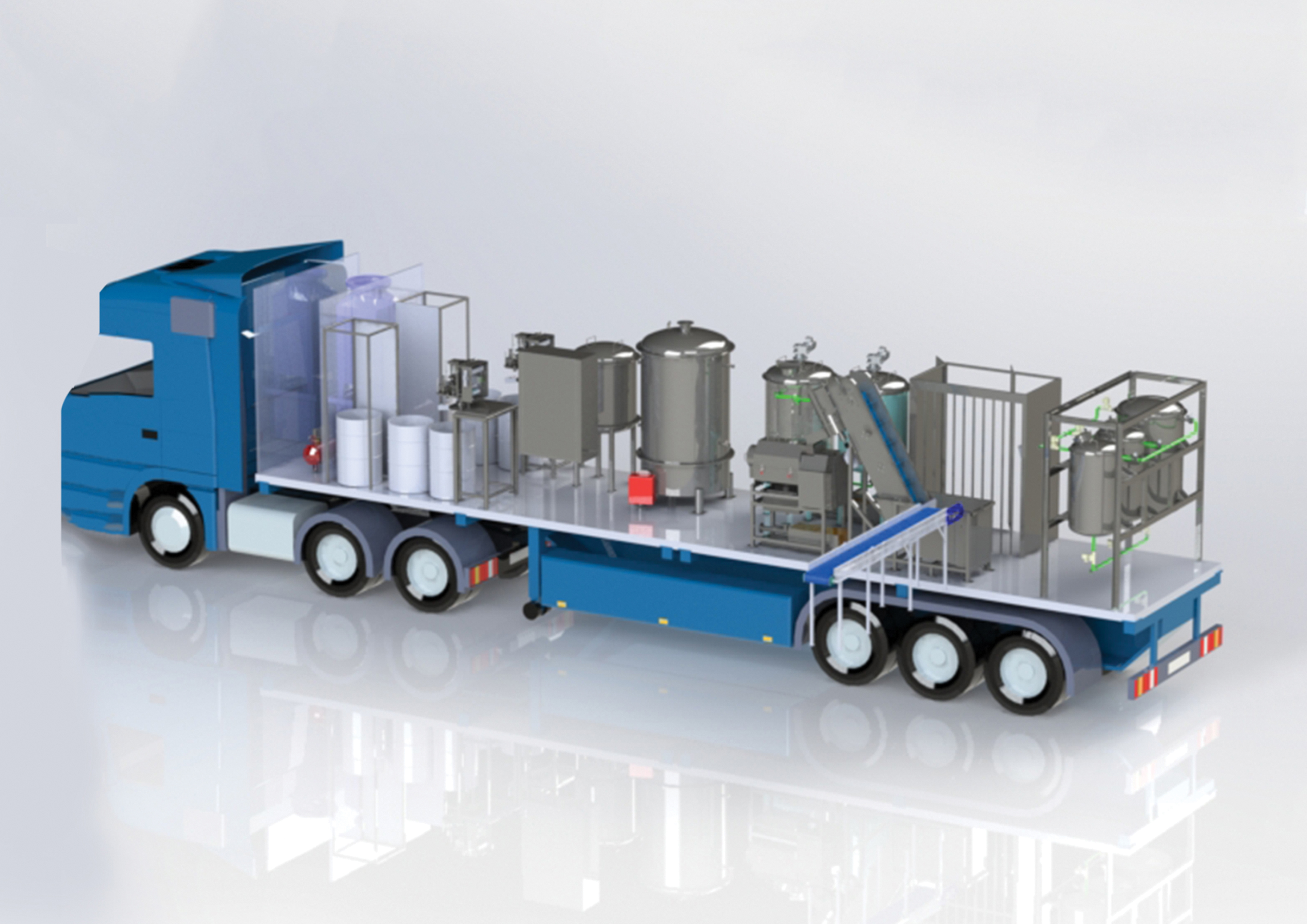
 The mobile aseptic unit: pulping, sterilizing, and filling on a single skid, parked at the farm gate.
What buyers want in 2026
Ask a shopper where their fruit puree came from. They expect an answer.
Retailers now push suppliers for full batch tracing, farm to shelf. They're not waiting for every rule to be finalized. They want the answer before they place the order.
Origin data has become a label claim, not just a compliance file. Shoppers see it. They read it. They decide with it.
The shift can happen fast. After a single contamination scare tied to unclear sourcing, consumer interest in produce provenance can spike within months. Shoppers don't wait for new laws. They change their buying habits on their own. Across recent surveys, most shoppers say every food product should carry clear labeling showing where it came from.
And they'll pay for it. Research on fruit exports has found buyers are willing to pay a premium for produce they can verify, once they understand what the traceability data is showing them.
This isn't a future trend. It's already moving purchases and prices, today.
Why old factories can't answer the question
A factory built to process ten thousand tonnes a year sits in one place. It has to.
Fruit doesn't. Fruit gets picked across dozens of farms, sometimes hundreds of kilometers apart. It travels. It waits in trucks. It waits again at the plant gate.
By the time anyone asks "where did this batch come from," the answer lives in three different systems, two spreadsheets, and someone's memory of which truck arrived on which day.
That's not proof. That's a paper trail, built after the fact, hoping nothing got lost along the way.
The fix: move the plant to the fruit
Here's the better way.
Build the plant small enough to move. Pulping, sterilizing, and aseptic filling — all in one unit, on a single skid. Then park it at the farm gate.
Fruit goes from tree to pack in hours, not days. No truck ride. No holding yard. No handoff between five different companies before the batch even reaches a processor.
One unit. One farm. One clear answer to where the batch came from — because it never left.
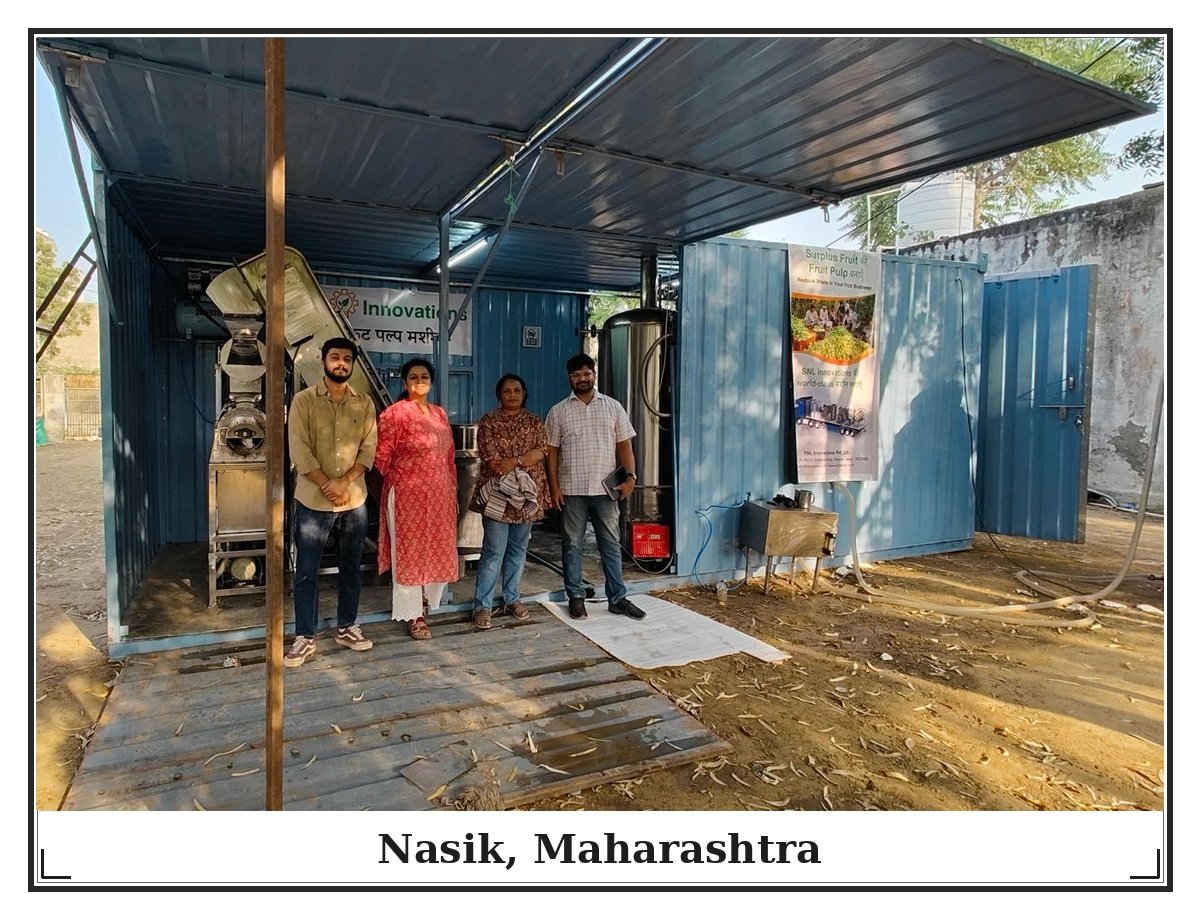
 The team on site at Nasik, Maharashtra — the unit installed and running.
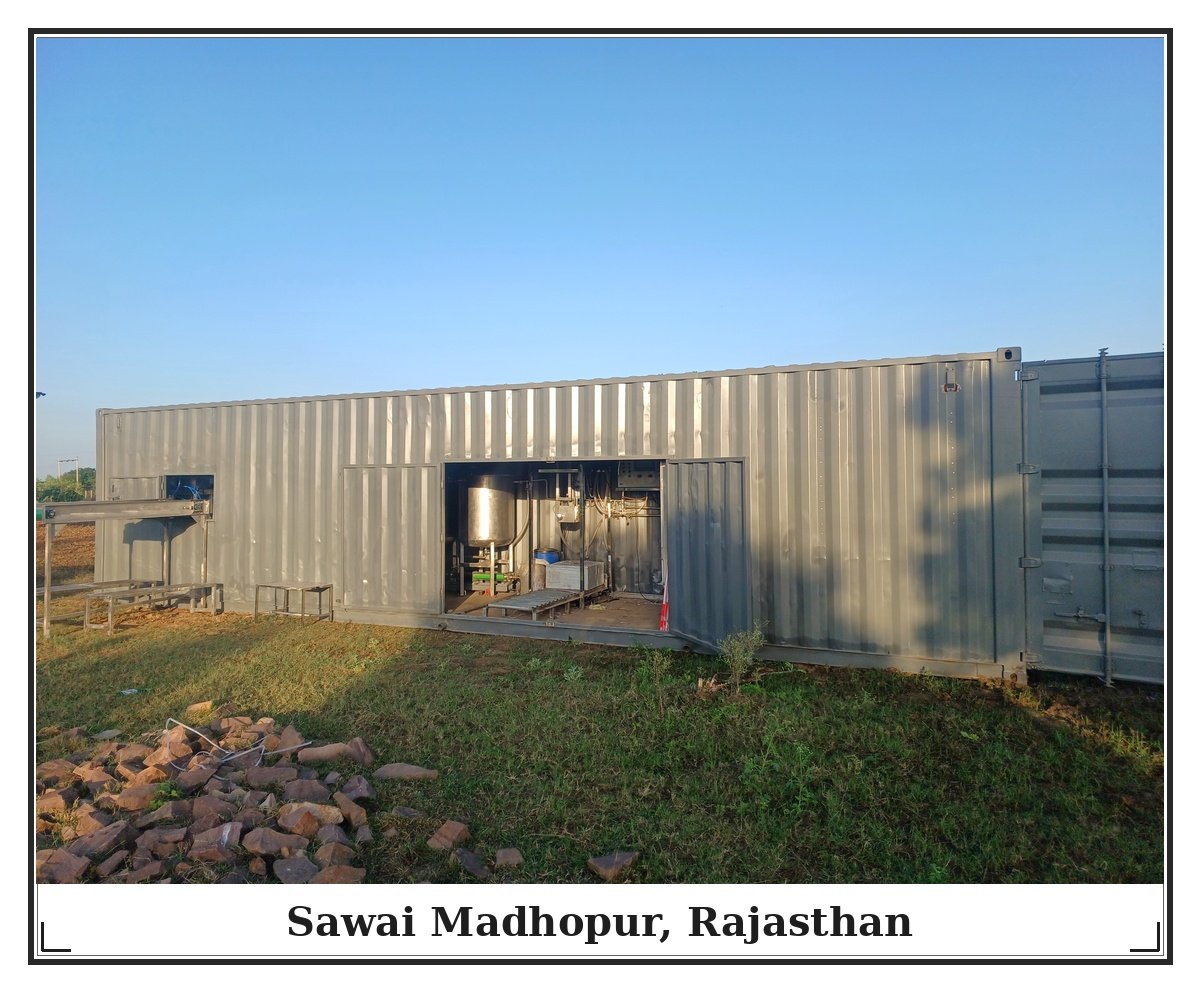 The unit on site at Sawai Madhopur, Rajasthan — parked and running at the farm gate.
Why the fruit tastes better
Fruit ripens on the tree. It doesn't ripen in a warehouse.
Pick it ripe, process it the same day, and you keep what the tree actually gave you — the sugar, the color, the smell of the fruit before anyone touched it.
No cold storage standing in for freshness. No artificial ripening to fake what time already took away. Just fruit, processed while it's still fruit.
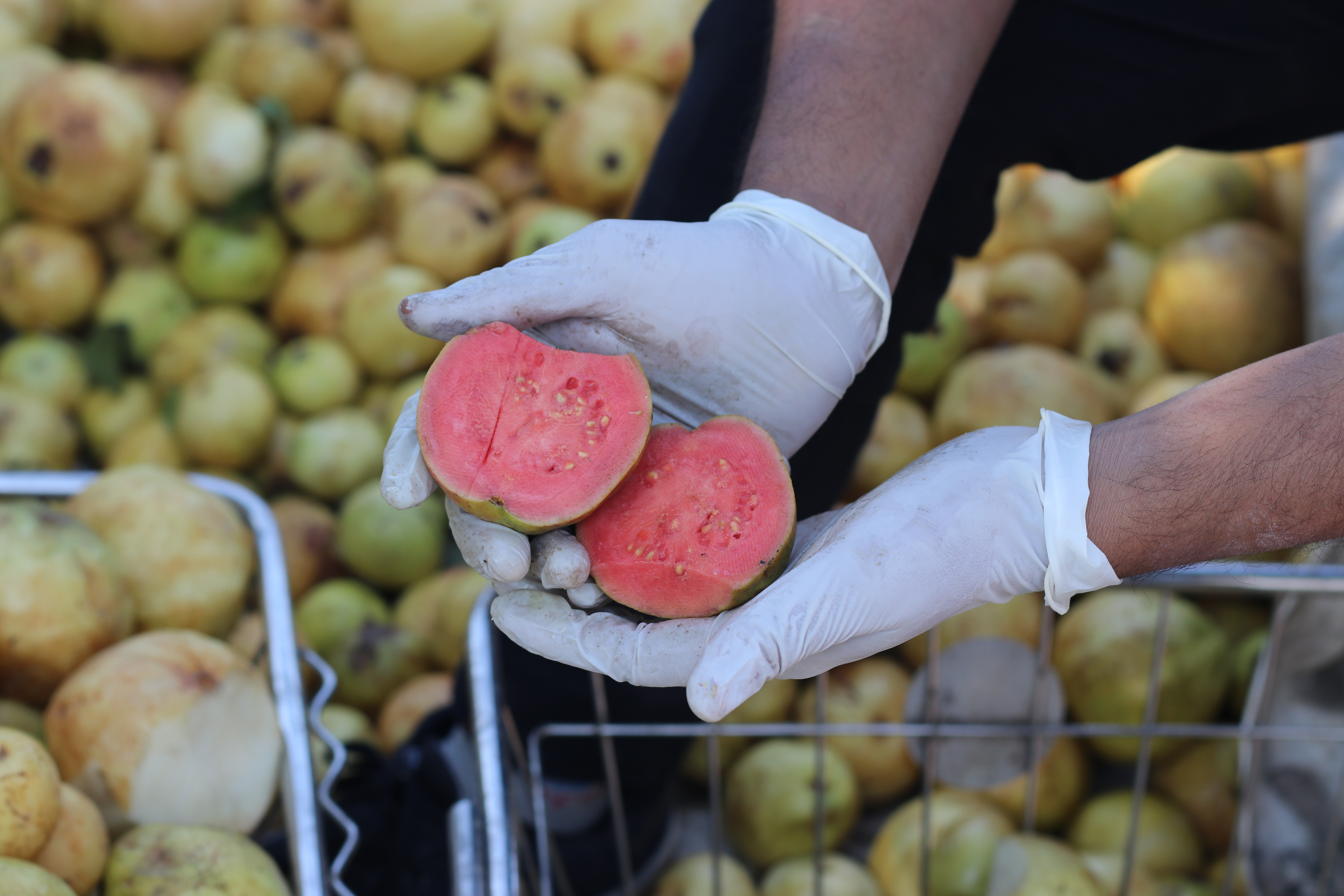
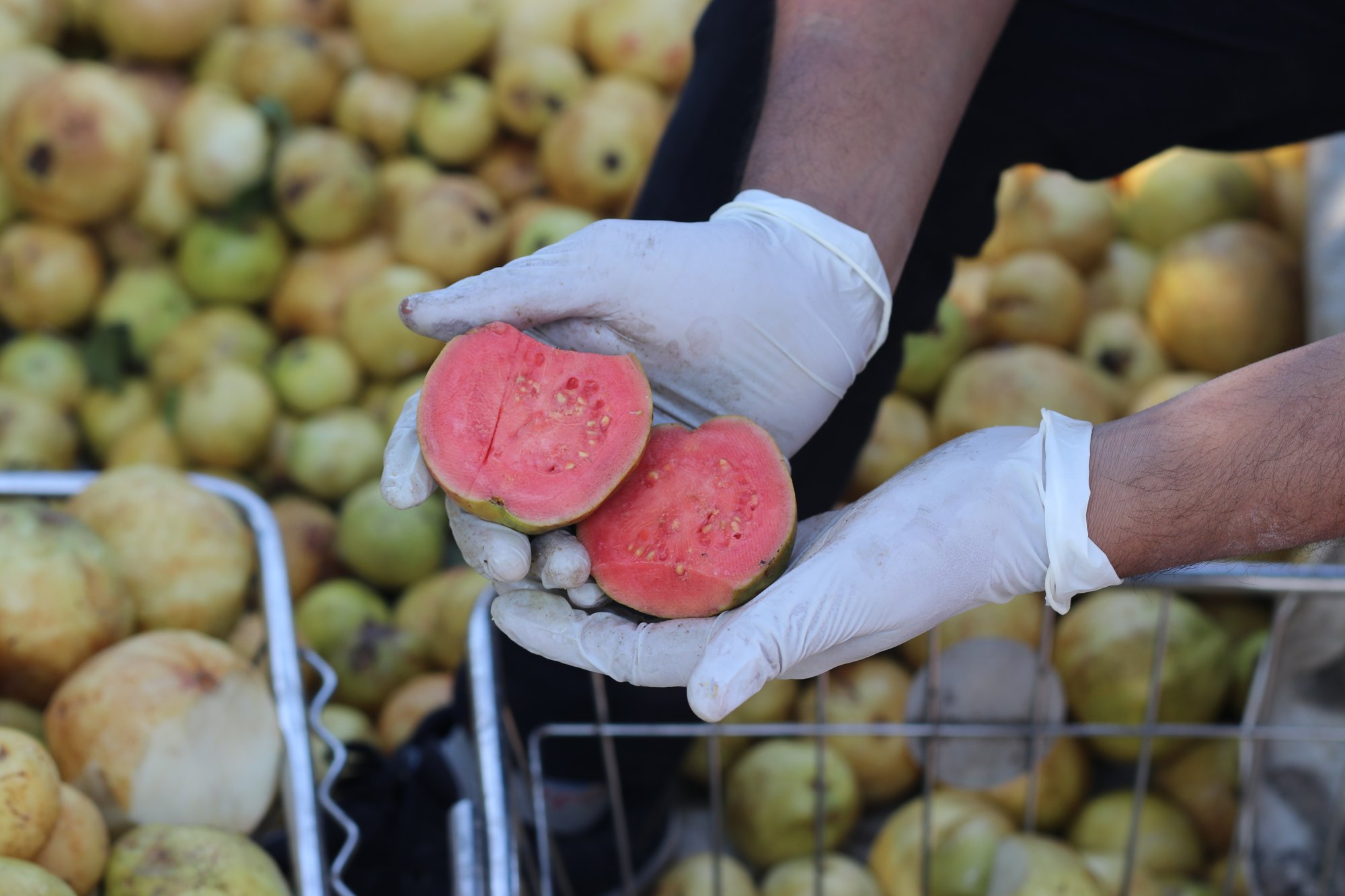 Freshly halved guava, still cool from the crate — the sugar and color a warehouse can't fake.
The proof is built in, not bolted on
Most supply chains try to add traceability after the process is already built. A barcode here. A logbook there. A software layer stitching it all together, hoping the humans filled in every field correctly.
A mobile unit skips that problem entirely.
When the plant sits on the farm, the batch record writes itself. One farm. One harvest day. One run. Nothing to reconcile, because nothing was ever separated in the first place.
The place is the proof.
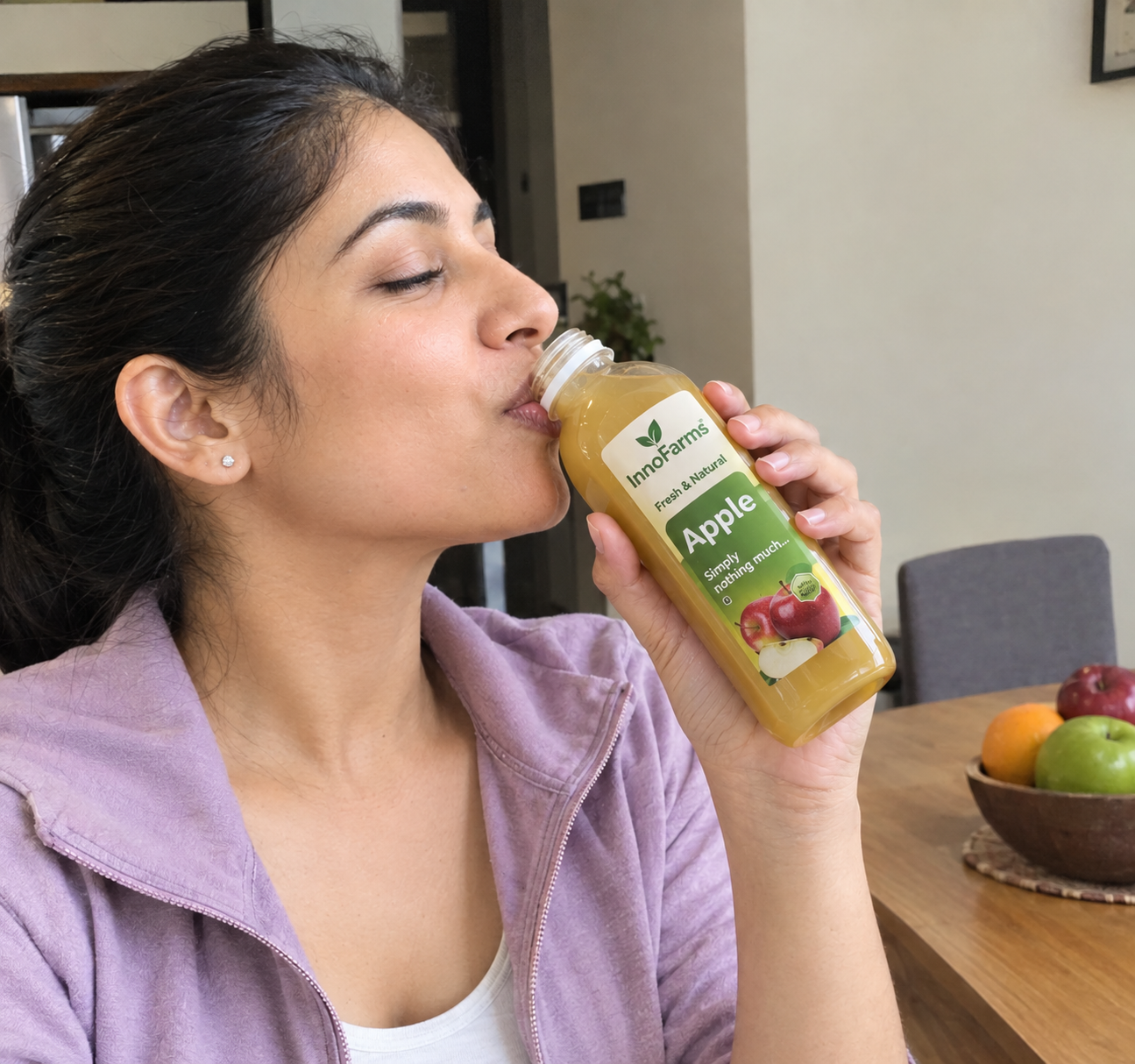 The result: a consumer holding a bottle that traces straight back to the batch it came from.
Bottle and label shown are for reference purposes only; actual product may vary.
What the farmer gets
This isn't just a better story for the label. It changes what a farmer earns.
Less fruit spoils waiting for a truck that's running late.
No more selling at whatever price a faraway buyer offers, because that buyer knows the fruit won't hold.
And instead of selling raw fruit for raw-fruit money, the farmer's harvest leaves the gate already processed — worth more, because someone else didn't have to do that work three states away.
 Harvest carried straight from the orchard — minutes from the mobile unit, not hours from a truck.
A factory that moves is a factory that can't lie
That's the whole idea, in one line.
Processing on the farm doesn't just make better fruit. It makes an honest supply chain — one where the proof isn't a system you build and maintain. It's just where the plant happened to be standing.
Buyers are already asking the question. Now you have an answer that doesn't need a spreadsheet to back it up.
Want to talk about mobile aseptic processing technology? astha@innofarms.co.in